Bricklaying
- Apr 14, 2023
- 4 min read
Updated: Mar 7, 2024
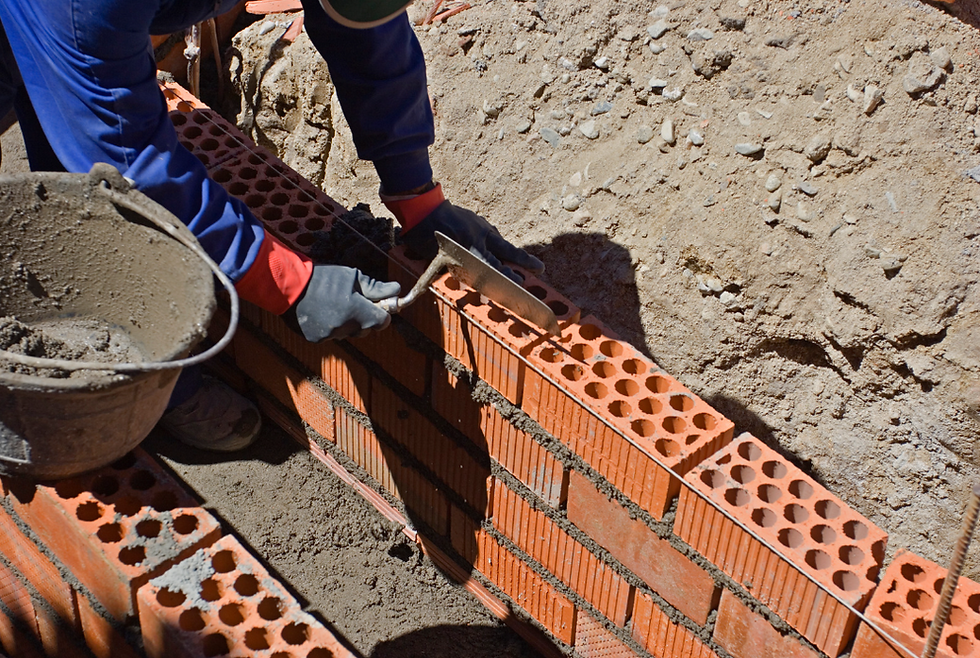
Bricklaying is the art of constructing structures using bricks, mortar, and other materials. It involves laying rows of bricks in a specific pattern and using mortar to bond them together. Bricklayers work on a variety of projects, from building homes to constructing large commercial buildings. It is a physically demanding profession that requires attention to detail and a good sense of spatial awareness. As a skilled trade, bricklaying offers a stable and lucrative career path with opportunities for growth and advancement.

1. Admissions Guide for Bricklaying Courses in Australia
This diagram provides a brief guide to the admission process for high school and university graduates who wish to study Bricklaying programs in Australia.

2. Entry Requirements for Bricklaying Studies in Australia
The table below outlines the minimum entry requirements for international students who are interested in pursuing studies in Bricklaying in Australia. Entry requirements are categorized into academic and English language requirements. For detailed admission requirements, please consult with an Australian Study Abroad Counselor (QEAC).
Note: These requirements may vary depending on the institution.
Qualification | IELTS | Academic Requirement |
Certificates | 5.5 (no band less than 5.0) | Year 11 |
Diploma | 5.5 (no band less than 5.0) | Year 12 with ATAR |
3. Structure of Bricklaying Courses in Australia
The following table provides an overview of the structure of a Bricklaying course for international students in Australia. It outlines the key components of the course and briefly describes what each component covers. This information can be useful for students who are interested in pursuing a career in bricklaying and want to gain a better understanding of the different areas of knowledge and skills that they will acquire through the course.
Note: The components and course structure may vary depending on the institution and specific course.
Component | Description |
Introduction to Bricklaying | This component covers the basic principles of bricklaying, including materials, tools, and safety procedures. Students learn how to mix and apply mortar, lay bricks in a straight line, and build basic structures. |
Bricklaying Techniques | This component focuses on advanced bricklaying techniques, such as creating arches, curves, and complex patterns. Students learn how to use various tools, including trowels, levels, and hammers, to achieve precision and accuracy in their work. |
Construction Drawings | This component covers the interpretation and use of construction drawings and specifications in bricklaying projects. Students learn how to read and understand technical drawings and translate them into real-world construction. |
Structural Principles | This component covers the structural principles that underpin bricklaying, including load-bearing walls, lintels, and arches. Students learn how to calculate loads and stresses and design structures that are strong, safe, and stable. |
Workplace Health and Safety | This component covers the occupational health and safety requirements for working in the bricklaying industry. Students learn about risk assessment, hazard identification, and the safe use of tools and equipment. |
Work-based Training | This component provides students with the opportunity to apply their theoretical knowledge in a real-world context. Students undertake work-based training in a supervised setting to develop their practical skills and gain industry experience. |
4. List of Bricklaying Schools in Australia
This table provides a comprehensive list of bricklaying schools located in various states and territories across Australia. The schools listed offer a range of courses and programs related to bricklaying, including safety procedures, interpreting plans, and laying bricks and blocks. Prospective students and individuals interested in pursuing a career in bricklaying can use this table as a resource to explore available options for education in this field in Australia.
State/Territory | Institution |
NSW | TAFE NSW Signet Institute Australian Health and Management Institute (AHMI) Duke College |
VIC | Melbourne Polytechnic (Heidelberg) Harward International College (HIC) |
QLD | TAFE QLD Signet Institute |
SA | Signet Institute |
ACT | Canberra Business & Technology College (CBTC) |
WA | Everthought Skills Australia Institute |

5. Hierarchy of Bricklaying Positions and Descriptions
The table outlines the positions in the bricklaying hierarchy in Australia, from an Apprentice to a Project Manager. Responsibilities and required skills increase with each position, with higher positions requiring experience in managing a team of bricklayers, designing and implementing quality bricklaying projects, and ensuring compliance with regulations and standards.
Note that the positions and descriptions may vary depending on the bricklaying institution or organization.
Position | Description |
Apprenticea | An entry-level position where individuals learn the skills and techniques of bricklaying under the guidance of experienced bricklayers. |
Bricklayer | A skilled bricklayer who can work independently and produce high-quality bricklaying work. |
Site Supervisor | An experienced bricklayer who oversees bricklaying work on a construction site, ensuring safety, quality, and efficiency. |
Project Manager | A professional who manages all aspects of a bricklaying project, including planning, budgeting, and managing a team of bricklayers. |

6. Career Information for Bricklaying in Australia
The table below provides an overview of the career path and future prospects for becoming a professional in the field of bricklaying in Australia. It includes information on the job outlook, employment size, future job growth rate, average salary, employee percentage, female employment rate, and the average age of the workforce in this field. This information can be helpful for students who are considering pursuing a career in bricklaying and want to understand the potential opportunities and challenges in this industry.

Occupation | Bricklayers and Stonemasons (ANZSCO ID 3311) |
Job Type | Technicians And Trades Workers |
Skill Level | Medium skill |
Unemployment Rate | Below average |
Employed | 32,000 |
Future Growth | 2% |
Weekly Earnings | A$1,401 |
Full - Time Share | 76% |
Female Share | 1% |
Average Age | 38 |

7. Immigrating to Australia through Bricklaying
The diagram below provides an overview of the general process for immigrating to Australia through bricklaying courses, including available visa options and the information on related occupations.

Skilled Independent visa (Subclass 189) | Skilled Nominated visa (Subclass 190) | Skilled Work Regional (Provisional) visa (Subclass 491) | Temporary Skill Shortage visa (Subclass 482) | Skilled Employer Sponsored Regional (Provisional) visa (Subclass 494) |
O | O | O | O | O |
Occupation | ANZSCO | List | Visa | Accessing Authority |
Bricklayer | 331111 | MLTSSL | Subclass 186 Subclass 189 Subclass 190 Subclass 482 Subclass 494 Subclass 491 | TRA |

Comments